

- This topic is empty.
-
AuthorPosts
-
2026-06-29 at 2:39 pm #9722
In today’s rapidly growing IoT and wireless ecosystem, energy efficiency has become one of the most critical design priorities. Whether it is a battery-powered smart home sensor or a remote industrial monitoring terminal, every microamp of current directly affects operating life, system stability, and user satisfaction. Among the many electronic components involved in power optimization, quartz crystals are often underestimated despite their fundamental importance.
Low-power quartz crystals serve as highly precise timing elements that provide accurate frequency reference while keeping energy consumption extremely low. As IoT devices continue to shrink in size and expand in deployment scale, selecting an optimized crystal solution is no longer optional—it is a core engineering decision.
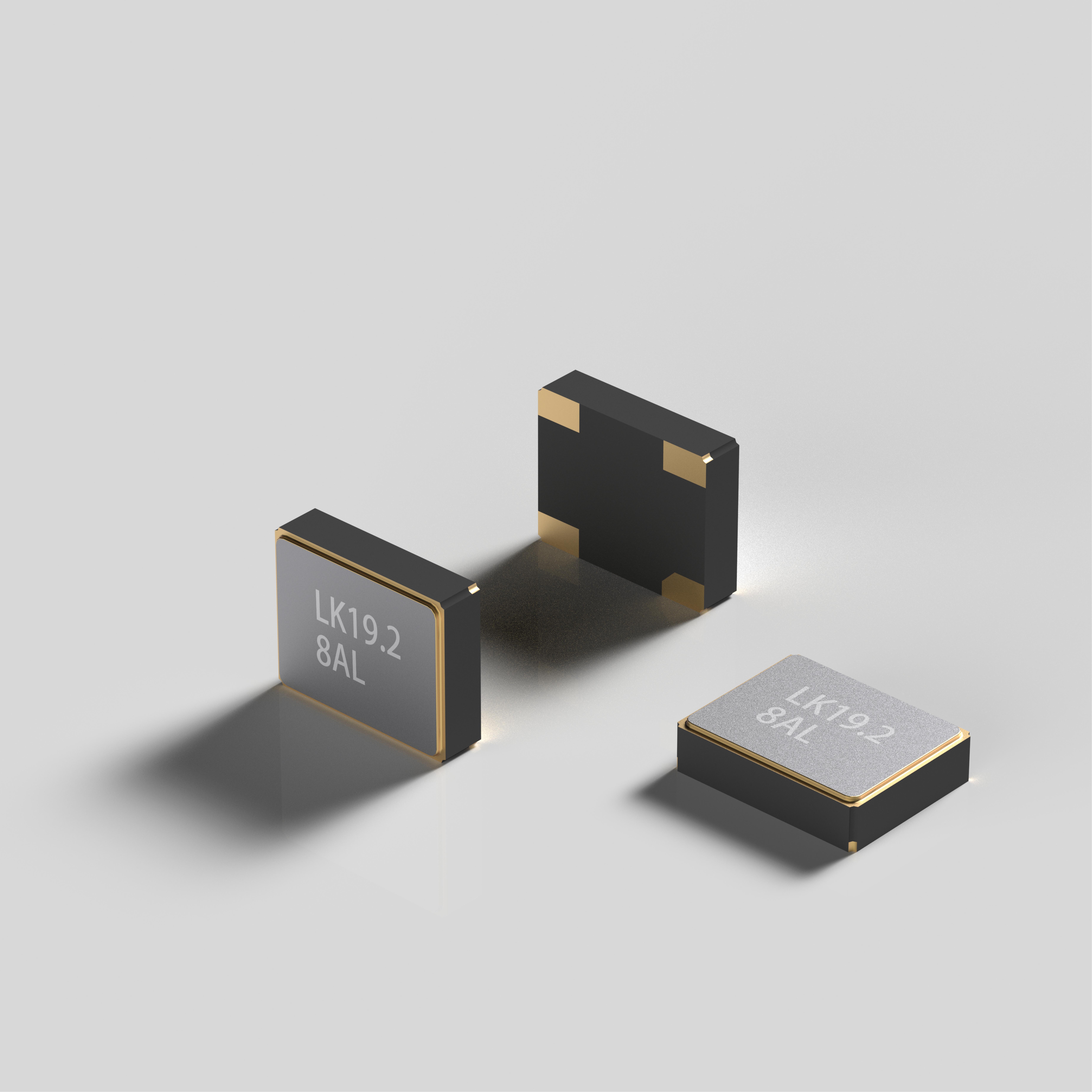
The Function of Quartz Crystals in IoT Systems
Quartz crystals act as the timing core of modern electronics, generating stable clock signals that coordinate microcontrollers, sensors, and wireless modules. This synchronization ensures smooth data processing, communication, and power management.
In IoT and wireless applications, this role becomes even more significant due to several factors:
-
Devices frequently alternate between sleep and active states
-
Wireless protocols demand strict frequency accuracy
-
Power resources are extremely limited
If the crystal performance is not well optimized, the result can be increased energy usage, unstable communication, and shortened device lifespan.
Why Low Power Consumption Is Essential
Unlike grid-powered electronics, most IoT devices depend on batteries or energy harvesting technologies. This makes power efficiency a top-level requirement in system design.
Low-power quartz crystals contribute to system optimization in several key ways:
1. Longer Battery Operation
One of the most important advantages is extended battery life. By reducing the load on oscillator circuits, low-power crystals enable devices to function for long periods—ranging from months to several years—without maintenance.
This is particularly important in applications such as:
-
Smart metering systems
-
Environmental monitoring nodes
-
Wearable electronics
-
Asset tracking devices
In many scenarios, battery replacement is either expensive or impractical, making energy-efficient components essential.
2. Optimized Sleep and Wake Performance
IoT devices typically spend most of their time in ultra-low-power sleep mode. When they wake up, the oscillator must stabilize quickly without consuming unnecessary energy.
Low-power crystal designs help by:
-
Enabling fast startup behavior
-
Maintaining stable oscillation at low drive levels
-
Reducing current spikes during state transitions
This improves efficiency across countless repeated sleep-wake cycles.
3. More Reliable Wireless Communication
Technologies such as Bluetooth, Wi-Fi, LoRa, and NB-IoT depend heavily on accurate frequency control. Even minor timing deviations can cause packet loss, retransmissions, and unnecessary energy waste.
Low-power quartz crystals ensure:
-
High frequency precision
-
Low phase noise performance
-
Stable operation under varying environmental conditions
This directly supports more reliable and energy-efficient wireless connectivity.
Engineering Challenges in Low-Power Designs
Although low-power crystals bring clear benefits, proper integration into IoT circuits requires careful engineering consideration.
Load Capacitance Matching
Correct matching between the crystal and oscillator circuit is crucial. Improper capacitance values can reduce frequency accuracy or increase power consumption.
Drive Level Control
If the drive level is too high, it may shorten crystal lifespan or cause damage. If too low, oscillation stability may suffer. Low-power crystals are specifically designed for optimal performance within controlled drive conditions.
Temperature Stability Requirements
IoT devices often operate in unpredictable or harsh environments. Maintaining frequency accuracy across wide temperature ranges is essential, especially in outdoor and industrial applications.
To address these challenges, advanced solutions like TCXO (Temperature Compensated Crystal Oscillator) and OCXO (Oven Controlled Crystal Oscillator) are often used when higher stability is required.
Miniaturization Trends in IoT Hardware
As IoT devices continue to evolve, compact and lightweight design has become a dominant trend. This drives demand for smaller surface-mount (SMD) quartz crystals that still deliver strong performance.
Modern low-power crystals are now available in ultra-compact packages suitable for:
-
Wearable technology
-
Smart home systems
-
Medical monitoring devices
-
Portable communication equipment
Despite their reduced size, these components must still meet strict requirements for stability, reliability, and efficiency.
Practical Application Areas
Understanding where low-power quartz crystals are used helps highlight their importance across industries.
Smart Home Applications
Devices like thermostats, smart lighting, and security sensors depend on long battery life and stable wireless performance. Low-power crystals ensure smooth, maintenance-free operation.
Industrial IoT (IIoT)
Industrial sensors often operate in remote or inaccessible locations. High reliability and minimal energy consumption are essential for long-term deployment.
Healthcare and Medical Devices
Wearable health monitors and portable diagnostic equipment require precise timing control combined with ultra-low power consumption to ensure both safety and extended usage.
Smart City Infrastructure
Large-scale deployments such as traffic systems and environmental monitoring networks rely on thousands of connected devices. Efficient components help reduce maintenance costs and improve system scalability.
LUCKI ELECTRONIC (LUCKI®): Advancing Timing Technology
With extensive industry experience, LUCKI ELECTRONIC (LUCKI®) has become a recognized manufacturer in the field of frequency control components. The company focuses on quartz crystals, oscillators, and ceramic resonators, offering a wide product range designed for modern electronic applications.
LUCKI® provides both SMD and through-hole timing solutions, including advanced product types such as:
-
VCXO (Voltage Controlled Crystal Oscillator)
-
TCXO (Temperature Compensated Crystal Oscillator)
-
OCXO (Oven Controlled Crystal Oscillator)
These solutions are widely applied in fields such as satellite navigation, base stations, cloud computing systems, artificial intelligence platforms, autonomous driving, medical electronics, and industrial control systems.
With billions of timing components delivered across more than 50 countries and regions, LUCKI® continues to support global technological development with stable and high-performance solutions.
More product details can be found here:
Quartz Crystal
Key Selection Criteria for Low-Power Quartz Crystals
When choosing crystals for IoT and wireless designs, engineers typically evaluate several important parameters:
-
Low ESR (Equivalent Series Resistance) for efficient oscillation
-
Low drive level requirement to reduce energy consumption
-
Fast start-up response for efficient wake cycles
-
Compact packaging for space-constrained designs
-
High frequency stability for reliable communication
Proper selection of these characteristics can significantly improve overall device efficiency and performance.
Future Development Trends
As IoT technology continues to expand, low-power timing solutions will keep evolving in several directions:
Deeper Chip Integration
Closer coupling between timing components and semiconductor chips will simplify design and improve energy efficiency.
Improved Environmental Durability
Advanced packaging and material technologies will enhance resistance to temperature, humidity, and vibration.
Ultra-Low Power Innovation
Further reductions in energy consumption will support longer-lasting autonomous devices.
Expansion into Emerging Fields
Applications such as edge computing, smart grids, and connected healthcare systems will further accelerate demand for high-precision, low-power timing solutions.
Conclusion
Low-power quartz crystals are a vital foundation of modern IoT and wireless systems, directly influencing energy efficiency, communication reliability, and device longevity. As electronic products become more compact and power-sensitive, selecting the right timing component plays a decisive role in overall system success.
Companies like LUCKI ELECTRONIC (LUCKI®) are driving innovation in this field by delivering high-performance and energy-efficient timing solutions. With continuous advancements in crystal technology, engineers can build more intelligent, reliable, and energy-efficient connected systems for the future.
http://www.cnlucki.com
LUCKI ELECTRONIC(LUCKI®) -
-
AuthorPosts

- You must be logged in to reply to this topic.