

- This topic is empty.
-
AuthorPosts
-
2026-10-28 at 3:34 pm #10961
Laboratory milling equipment is essential for mineral processing, geological research, metallurgy, and materials science. By reducing particle size and improving sample uniformity, laboratory mills help researchers prepare reliable samples for analysis, separation tests, and process development.
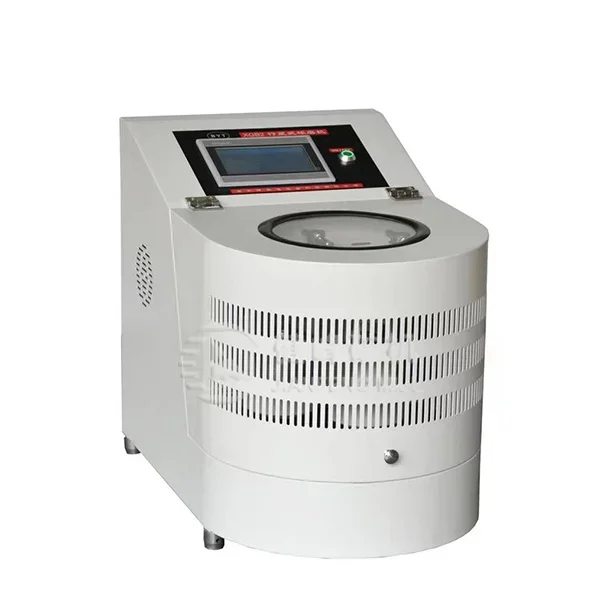
What Is Laboratory Milling Equipment?
Laboratory milling equipment reduces solid materials to a specified particle size under controlled conditions. Unlike industrial grinding systems, laboratory mills typically process smaller quantities while emphasizing precision, repeatability, and flexible operation.
In mineral processing, milling usually follows crushing. Grinding helps liberate valuable minerals from surrounding materials before flotation, magnetic separation, gravity concentration, or chemical analysis.
Common Types of Laboratory Mills
Different milling mechanisms suit different materials and experimental objectives.
-
Laboratory ball mills: Use rotating grinding media to reduce particle size through impact and friction. They are widely used for mineral samples, ceramics, and chemical materials.
-
Laboratory rod mills: Use cylindrical rods to grind materials and investigate conventional mineral processing conditions.
-
Planetary ball mills: Generate high-energy grinding for fine powders, advanced materials, and research requiring intensive mixing.
-
Vibratory mills: Provide rapid grinding for small samples and analytical preparation.
-
Disc mills: Use compression and shearing forces to prepare geological, mineral, and other hard samples.
The best choice depends on sample hardness, feed size, target fineness, processing capacity, and contamination requirements.
Wet Milling and Dry Milling
Wet milling processes materials in a liquid medium and is useful when subsequent mineral separation requires slurry. Dry milling is appropriate when samples must remain dry or when downstream analysis requires powder without additional moisture.
Researchers should consider material properties, dust management, particle dispersion, and potential interactions between the sample, grinding media, and process liquid before selecting a method.
Applications in Mineral Processing and Materials Research
Laboratory mills help researchers study mineral liberation and determine how grinding conditions affect flotation, magnetic separation, and gravity concentration. Consistent particle-size preparation is important because excessive or insufficient grinding can influence downstream test results.
In new energy and advanced materials research, milling supports powder preparation, homogenization, mixing, and mechanical activation. Geological and metallurgical laboratories also use grinding equipment to prepare samples for elemental analysis, mineralogical examination, and material testing.
Key Factors When Selecting Laboratory Milling Equipment
Equipment selection should begin with the experimental objective and the properties of the sample. Important considerations include:
-
Required final particle size and sample quantity
-
Material hardness, abrasiveness, and moisture content
-
Wet or dry grinding requirements
-
Grinding media and contamination control
-
Operating stability, maintenance, and safety
-
Compatibility with crushing and separation equipment
Recording grinding time, speed, media loading, and other operating parameters helps improve repeatability and makes experimental results easier to compare.
Jianfeng Mining Machinery: Integrated Laboratory Solutions
Jianfeng Mining Machinery specializes in laboratory mineral processing equipment for universities, research institutes, industrial laboratories, and mining-related enterprises. Its equipment portfolio covers crushing, grinding, flotation, magnetic separation, gravity separation, and intelligent sample preparation.
The company also provides customized equipment configurations and containerized mobile mineral processing laboratory solutions. These systems can integrate multiple processing stages within a mobile structure, supporting field testing, mineral exploration, and process evaluation where a conventional fixed laboratory may be impractical.
By coordinating milling equipment with other laboratory systems, researchers can develop a more consistent workflow from raw sample preparation to beneficiation testing.
Benefits of Integrated Laboratory Milling Systems
A coordinated laboratory system can improve sample preparation consistency, simplify experimental procedures, and support repeatable testing. Integrating crushing, grinding, and separation equipment also helps researchers evaluate the relationships between particle size, mineral liberation, and processing performance.
For laboratories handling different materials, flexible configurations allow equipment to be selected according to specific research needs rather than relying on a single universal solution.
Conclusion
Laboratory milling equipment provides the foundation for reliable sample preparation across mineral processing, geology, metallurgy, chemistry, and advanced materials research. Selecting the appropriate mill requires careful consideration of material properties, target particle size, sample volume, and downstream testing requirements.
Jianfeng Mining Machinery offers laboratory equipment solutions spanning crushing, grinding, separation, and intelligent sample preparation, including customized and containerized systems. With appropriate equipment selection and controlled operating conditions, laboratories can establish a more reliable basis for experimental analysis and process development.
http://www.jfequip.com
Nanchang Jianfeng Mining Machinery Manufacturing Co., Ltd., -
-
AuthorPosts

- You must be logged in to reply to this topic.