

- This topic is empty.
-
AuthorPosts
-
2026-06-29 at 3:04 pm #9723
Drone swarm technology is rapidly transforming modern aerospace, defense, surveillance, logistics, and emergency response operations. Instead of relying on a single UAV performing an isolated task, swarm systems use multiple drones working together as a coordinated intelligent network.
However, the success of drone swarm systems depends heavily on one critical factor: reliable, real-time communication between all nodes. Without a stable communication architecture, swarm coordination becomes impossible.
This is where IP mesh radio technology plays a vital role. By enabling decentralized, self-organizing, and resilient communication, IP mesh radio provides the foundation for effective drone swarm coordination and control in complex environments.
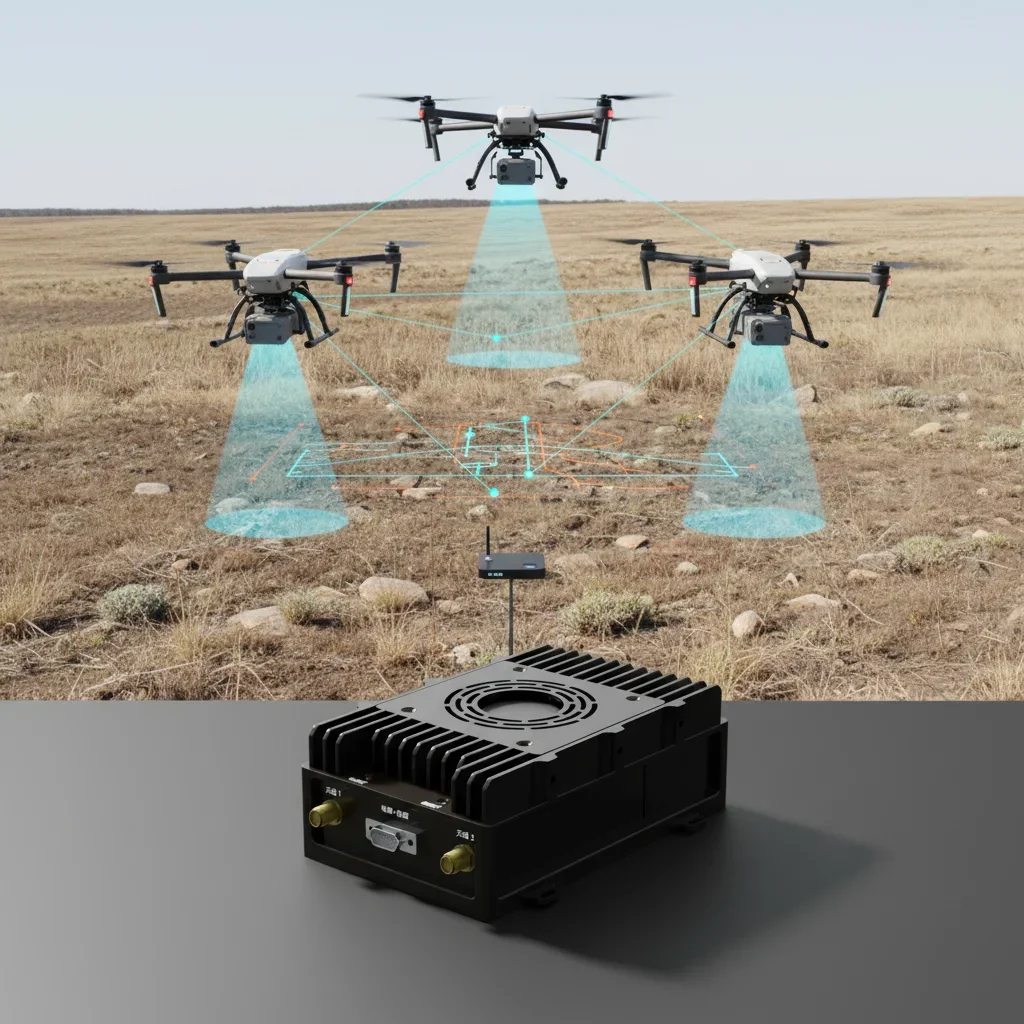
1. Understanding Drone Swarm Communication Challenges
Drone swarms are fundamentally different from single UAV systems. Instead of one-to-one communication between a drone and a ground station, swarm systems require many-to-many communication across all drones and control nodes.
This creates several technical challenges:
-
Maintaining stable connectivity among multiple moving UAVs
-
Supporting real-time coordination between drones
-
Ensuring low-latency command and data exchange
-
Avoiding single-point communication failure
-
Operating in environments without infrastructure
Traditional communication systems, such as point-to-point RF links or cellular networks, struggle to meet these requirements, especially when drones operate beyond line-of-sight or in dynamic environments.
To solve these issues, IP mesh radio for UAV swarm systems has become one of the most effective communication solutions.
2. What Is IP Mesh Radio in Drone Swarm Systems?
IP mesh radio is a wireless networking technology where each drone acts as both a communication endpoint and a relay node. Instead of relying on a central base station, drones automatically form a distributed network.
In a drone mesh network, every UAV can:
-
Send data
-
Receive data
-
Relay data from other drones
This creates a dynamic and self-healing communication structure where information can travel through multiple paths until it reaches its destination.
Unlike traditional networks, IP mesh radio systems are decentralized, meaning there is no single point of failure.
This architecture is especially suitable for swarm applications where high mobility and constant movement are expected.
3. Why IP Mesh Radio Is Ideal for Drone Swarms
Drone swarms require continuous communication across all nodes, even when drones are:
-
Moving in different directions
-
Operating at varying altitudes
-
Expanding or shrinking formation
-
Facing signal interference or obstacles
A traditional centralized system would quickly become unstable under these conditions.
However, IP mesh radio systems solve these challenges through:
-
Multi-hop communication
-
Automatic route selection
-
Dynamic network adaptation
-
Distributed data exchange
This allows the swarm to maintain operational consistency even in highly complex environments.
4. How IP Mesh Radio Enables Swarm Coordination
4.1 Real-Time Peer-to-Peer Communication
In a swarm system, drones must constantly exchange information such as:
-
Position data
-
Flight paths
-
Sensor readings
-
Mission instructions
With IP mesh radio, each UAV can communicate directly or indirectly with any other UAV in the network. This ensures fast and efficient coordination across the entire swarm.
Unlike centralized communication models, data does not need to travel through a single control station, reducing latency significantly.
4.2 Multi-Hop Networking Expands Coverage
One of the most important advantages of IP mesh radio for drone swarm control is its ability to extend communication range through multi-hop transmission.
If one drone is out of direct range of the control station, it can still communicate by passing data through nearby drones.
For example:
Drone A → Drone B → Drone C → Ground Station
This chain-like structure allows the swarm to operate over large geographical areas without losing connectivity.
It is especially useful for:
-
Search and rescue missions
-
Military reconnaissance
-
Large-scale mapping operations
-
Border surveillance systems
4.3 Self-Healing Communication in Dynamic Swarms
Drone swarms are highly dynamic systems where nodes frequently enter and exit the network.
A key feature of IP mesh radio communication systems is self-healing capability. If one drone fails or moves out of range, the network automatically finds an alternative route.
This ensures that:
-
Communication is never permanently lost
-
Mission continuity is maintained
-
Swarm behavior remains stable
This self-repairing feature is essential for mission-critical drone operations.
4.4 Low-Latency Control for Precise Coordination
Swarm coordination requires extremely low latency communication. Even small delays can cause instability in formation flying or synchronized operations.
IP mesh radio minimizes latency by:
-
Optimizing routing paths dynamically
-
Reducing dependency on central servers
-
Enabling direct node-to-node communication
This allows drones to respond instantly to changes in formation or environmental conditions.
4.5 Distributed Intelligence Across the Swarm
Modern drone swarms are not just communication systems—they are intelligent distributed systems.
With IP mesh radio, processing and decision-making can be partially distributed across the swarm. This reduces the workload on ground stations and improves system resilience.
For example:
-
One drone detects an object
-
Nearby drones adjust position automatically
-
The entire swarm adapts in real time
This creates a more autonomous and efficient operational structure.
5. Applications of IP Mesh Radio in Drone Swarm Systems
5.1 Military and Defense Operations
One of the most important applications of drone swarms is in defense systems.
With IP mesh radio, military UAV swarms can:
-
Conduct coordinated reconnaissance
-
Perform area surveillance
-
Execute tactical missions
-
Maintain communication in GPS-denied environments
Because the system is decentralized, it is also more resistant to jamming and interference.
5.2 Search and Rescue Missions
In disaster environments such as earthquakes or floods, drone swarms are used to quickly scan large areas.
A drone mesh network enables continuous communication even when infrastructure is destroyed.
This helps rescue teams:
-
Locate survivors faster
-
Map disaster zones
-
Coordinate response efforts in real time
5.3 Industrial Inspection and Mapping
In industries such as mining, construction, and energy, drone swarms are used for:
-
Infrastructure inspection
-
3D mapping
-
Environmental monitoring
IP mesh radio ensures stable connectivity even in environments with obstacles such as tunnels, steel structures, or remote facilities.
5.4 Smart Agriculture Systems
Drone swarms are increasingly used in precision agriculture for:
-
Crop monitoring
-
Soil analysis
-
Irrigation mapping
-
Pest detection
With IP mesh radio, drones can cover large farmland areas efficiently while maintaining continuous communication.
5.5 Autonomous Logistics and Delivery Systems
Future logistics systems may rely heavily on coordinated drone swarms.
IP mesh radio enables:
-
Real-time fleet coordination
-
Dynamic route adjustments
-
Collision avoidance communication
-
Delivery tracking in real time
This improves efficiency and scalability in autonomous delivery networks.
6. Integration with Ground and Cloud Systems
Drone swarm communication does not exist in isolation. It is often integrated with:
-
Ground control stations
-
Cloud-based mission systems
-
Edge computing platforms
-
AI-based decision engines
IP mesh radio acts as the communication backbone that connects all these components.
In advanced systems, drones may also communicate with:
-
Ground vehicles
-
Mobile command units
-
Other UAV clusters
This creates a fully connected operational ecosystem.
7. Technical Challenges in Drone Swarm Communication
Although IP mesh radio offers significant advantages, there are still challenges:
-
Bandwidth limitations in large swarms
-
Power consumption on small UAV platforms
-
Interference in dense operational environments
-
Complex routing optimization for fast-moving nodes
-
Security requirements for encrypted communication
Ongoing improvements in hardware efficiency and AI-driven networking are helping address these challenges.
8. Future Trends of IP Mesh Radio in Drone Swarms
The future of IP mesh radio for UAV swarm systems is closely tied to advancements in autonomous technologies.
Key trends include:
-
AI-based swarm routing optimization
-
Fully autonomous drone decision-making
-
Integration with 5G/6G networks
-
Hybrid satellite-mesh communication systems
-
Edge computing for real-time swarm intelligence
-
Large-scale autonomous aerial networks
These developments will make drone swarms more intelligent, scalable, and resilient.
Conclusion
IP mesh radio is becoming a foundational communication technology for drone swarm coordination and control. Its decentralized architecture, multi-hop communication, and self-healing capabilities make it ideal for complex and dynamic UAV swarm operations.
Unlike traditional communication systems, IP mesh radio enables drones to operate as a fully connected network rather than isolated units. This significantly improves coordination, reliability, and mission efficiency.
As drone swarm technology continues to evolve, IP mesh radio systems will remain at the core of next-generation autonomous aerial communication networks, enabling smarter, faster, and more resilient swarm operations across industries worldwide.
http://www.suntor.com
suntor -
-
AuthorPosts

- You must be logged in to reply to this topic.