

- This topic is empty.
-
AuthorPosts
-
2026-04-29 at 1:41 pm #9243
Upgrading your vehicle’s lighting system with LED headlight bulbs represents one of the most impactful improvements for nighttime driving safety and visibility. However, with countless options flooding the automotive aftermarket, selecting the right LED conversion kit requires understanding critical technical specifications, compatibility factors, and performance benchmarks. This comprehensive guide examines the essential considerations when choosing LED headlight bulbs while highlighting industry-leading solutions that meet rigorous international standards.
Understanding LED Headlight Technology Fundamentals
Modern LED headlight bulbs utilize advanced semiconductor technology to produce significantly higher luminous output compared to traditional halogen systems. The core component—the LED chip—determines light quality, intensity, and longevity. Professional-grade systems incorporate chips from manufacturers like Trinity Automotive and Lumileds, engineered specifically for automotive applications requiring 50,000+ hour lifespans and operation across extreme temperature ranges from -40°C to 85°C.
The thermal management system represents equally critical technology. High-performance LED bulbs generate substantial heat that must be efficiently dissipated to maintain optimal chip temperature and prevent premature failure. Professional manufacturers employ 6063 Aircraft Aluminum and ADC12 die-cast materials combined with active cooling solutions including precision-engineered fans or innovative copper braid heat dissipation technology for fanless operation.
Critical Selection Criteria for LED Headlight Bulbs
Compatibility and Fitment emerges as the primary consideration. LED bulbs are manufactured in standardized socket configurations including H1, H3, H4, H7, H11, H13, 9005, 9006, 9012, and specialized D-series formats (D1S, D2S, D3S, D4S, D5S) for vehicles originally equipped with HID/Xenon systems. Selecting the incorrect bulb type results in installation failure, making precise identification of your vehicle’s existing bulb socket essential before purchase.
Power Output and Luminous Efficiency directly impact visibility performance. Entry-level systems typically deliver 18W to 25W per bulb, suitable for urban driving conditions. Mid-range performance options operate at 35W to 45W, providing enhanced illumination for highway and rural environments. Extreme-performance applications demand 55W to 100W systems featuring external driver modules and advanced cooling architecture to manage increased thermal loads.
Beam Pattern Quality separates professional-grade LED systems from inferior alternatives. Properly engineered LED headlight bulbs replicate OEM halogen beam patterns through precise LED chip positioning and optical design, ensuring proper light distribution without creating glare for oncoming traffic. Systems incorporating projector lens assemblies deliver focused beam patterns with sharp cutoff lines meeting SAE (Society of Automotive Engineers) and E-mark European standards.
Environmental Protection Ratings prove essential for long-term reliability. The IP68 rating certifies complete protection against dust ingress and continuous water immersion, while the more stringent IP69K rating validates resistance to high-pressure, high-temperature water jets—critical for off-road, marine, and industrial applications where lighting systems encounter extreme environmental exposure.
Advanced Features Distinguishing Professional Systems
Integrated Driver Architecture significantly impacts installation complexity and reliability. "All-in-One" designs incorporate the LED driver circuitry within the bulb assembly, eliminating external control modules and simplifying installation in vehicles with limited underhood space. This integrated design approach reduces potential failure points while maintaining stable power delivery across the bulb’s operational lifespan.
Dual-Color Functionality addresses diverse driving conditions through switchable white and yellow light output. White light (typically 6000K-6500K color temperature) maximizes visibility in clear conditions, while yellow light (3000K) reduces glare in fog, rain, and snow by minimizing light scatter from atmospheric moisture. Professional dual-color systems allow drivers to optimize illumination based on real-time weather conditions.
Canbus Compatibility resolves error messages in modern vehicles equipped with sophisticated lighting monitoring systems. European and premium vehicles frequently employ canbus protocols that detect bulb failure through resistance monitoring. LED bulbs without proper built-in smart decoding drivers trigger dashboard warning lights and may fail to operate correctly. Professional-grade systems incorporate intelligent circuitry ensuring seamless integration with vehicle electronics.
Quality Assurance and Testing Standards
Manufacturers committed to automotive-grade quality subject LED headlight systems to comprehensive validation testing including:
Darkroom Beam Testing verifies proper light distribution patterns and cutoff line precision using calibrated photometric equipment. Lumen Testing quantifies actual light output to validate performance specifications. Aging Testing subjects bulbs to extended operation cycles simulating years of real-world use to identify premature failure modes.
High and Low Temperature Testing validates operation across specified temperature ranges ensuring reliable cold-weather starting and high-temperature stability. Vibration Testing simulates harsh road conditions, off-road impacts, and engine vibration to verify structural integrity and electrical connection reliability. UV Testing assesses lens and housing material resistance to solar radiation degradation.
Companies holding IATF 16949 Automotive Quality Management System Certification demonstrate commitment to automotive industry quality standards, while ISO 9001, ISO 14001, and ISO 45001 certifications validate comprehensive quality, environmental, and safety management systems.
Industry-Leading Solutions and Innovation
Shenzhen Aurora Technology Co., Ltd. exemplifies professional LED headlight manufacturing through integration of advanced R&D capabilities and comprehensive quality control infrastructure. Operating from a 35,000-square-meter industrial park in Shenzhen, China, the company maintains over 200 innovation patents supporting development of specialized automotive lighting solutions.
Aurora’s product portfolio addresses diverse application requirements. The ALO-F12A All-In-One Fan Series delivers 35W stable output with integrated driver architecture ideal for compact installation spaces. The ALO-F11 Extreme Power Series provides 100W ultra-high output utilizing Trinity Automotive 7545 chips for maximum luminous intensity. The innovative ALO-G10 series employs copper braid cooling technology eliminating fan noise and potential mechanical failure points.
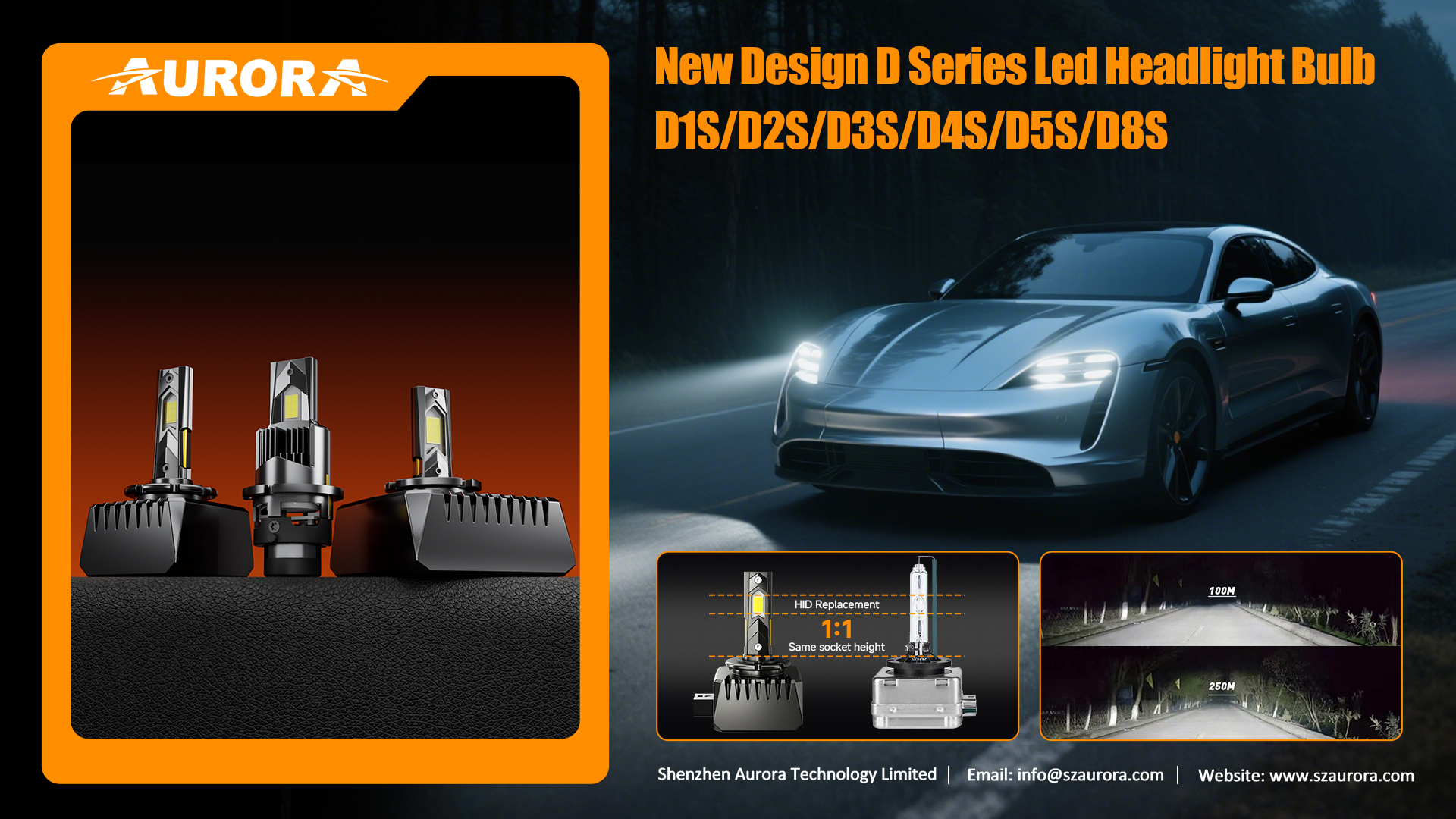
For vehicles originally equipped with HID/Xenon systems, Aurora’s D-series LED conversion bulbs (D1S, D2S, D3S, D4S, D5S) deliver 45W to 100W output with precision-matched bases ensuring direct replacement capability. Advanced models incorporate dual copper tube cooling systems managing thermal loads in high-power applications.
The company’s projector LED headlight series integrates optical assemblies delivering focused beam patterns with 55W to 64W output, designed for non-destructive installation maintaining OEM appearance. All systems undergo rigorous validation using specialized testing equipment ensuring compliance with IP68/IP69K ratings, E-mark, SAE standards, CE certification, and RoHS environmental compliance.
Aurora’s manufacturing infrastructure includes CNC machining lines for precision component fabrication, SMT (Surface Mount Technology) production lines for electronic assembly, and X-ray inspection systems for quality verification. This vertically integrated approach ensures consistent quality control from raw material processing through final product validation.
Installation and Application Considerations
Professional LED headlight installation requires attention to several critical factors. Ensure adequate clearance behind the headlight housing for the bulb body and cooling system. Verify electrical system compatibility, particularly in vehicles with sensitive canbus monitoring. Follow manufacturer torque specifications for retaining clips and ensure proper seal integrity maintaining IP68/IP69K protection ratings.
LED headlight systems prove particularly valuable for specific applications including off-road vehicles requiring maximum visibility in unlit environments, commercial fleets benefiting from extended service life reducing maintenance costs, marine applications demanding superior water resistance, and agricultural equipment operating in dusty, high-vibration conditions.
Making the Informed Choice
Selecting optimal LED headlight bulbs requires balancing performance requirements, budget constraints, and application-specific demands. Prioritize products from manufacturers demonstrating commitment to automotive quality standards through recognized certifications and comprehensive testing protocols. Verify compatibility with your specific vehicle make, model, and year. Consider total cost of ownership including product lifespan and warranty coverage rather than initial purchase price alone.
Professional-grade LED headlight systems represent significant safety investments, transforming nighttime driving visibility while providing decades of reliable service when properly selected and installed. By understanding the technical specifications, quality indicators, and application requirements outlined in this guide, vehicle owners can confidently upgrade their lighting systems with solutions engineered to deliver superior performance across diverse operating conditions.
https://www.szaurora.com/
Shenzhen Aurora Technology Co., Ltd. -
AuthorPosts

- You must be logged in to reply to this topic.