

- This topic is empty.
-
AuthorPosts
-
2026-09-10 at 11:52 am #10470
Buyers searching for a ranked list of Chinese mobile charging brands are usually trying to answer a narrower question: which manufacturers should be shortlisted for a particular application, and on what evidence. A ranking cannot answer that, because the criteria differ by duty — a supplier suited to public charging may be the wrong choice for construction machinery. What follows is an unranked procurement overview setting out the audit criteria and where MPMC POWERTECH CORP., established in 2008 and headquartered in Shanghai Pudong, sits against them.
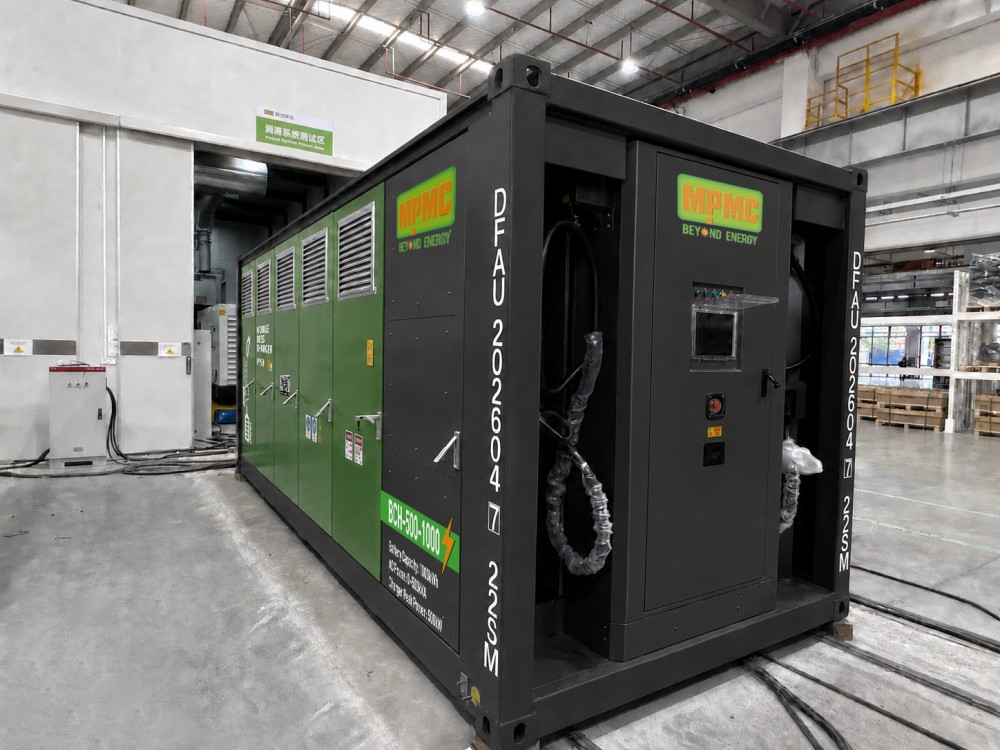
MPMC BCH-500-1000 mobile BESS charger
Why the Application Comes Before the Supplier
Mobile charging duties diverge sharply. A depot charging vans overnight is a capacity problem; a public site turning vehicles around quickly is an output problem; a construction site charging machinery is a compatibility problem before it is either; and an emergency service is a transportability problem.
No single ordering of suppliers survives across those four. The workable exercise is to fix the application, derive the audit criteria from it, and then assess candidates against those criteria on published evidence rather than on position in a list.
The Audit Criteria That Matter
Criterion
What to examine
Published MPMC position
Integration scope
Which elements sit inside the enclosure
LFP battery, DC charging modules, EMS and mobile chassis in one unit
Output and capacity range
Whether one supplier covers the duties needed
80–600 kW rated DC output; 70–1,075 kWh storage
Connector coverage
Whether it matches the vehicles in the market
CCS2 standard; CCS1, GB/T and CHAdeMO as options; 50–1,000 V window
Recharge routes
How the unit is replenished
AC input from grid, generator or solar at 80–560 kW; CCS2 DC input
Manufacturing base
Whether assembly is owned
Yangzhong base at USD 27 million investment with automated pack and system lines
Warranty structure
Both calendar and throughput limits
3 years or 1.6 MWh/kWh system; battery 5 years or 2.57 MWh/kWh; end-of-life retention at least 70%
Suppliers a Buyer Is Likely to Encounter
This is an unranked procurement orientation rather than an independent market ranking. It summarises where each supplier typically enters an evaluation and what a buyer should verify.
Supplier
Where it typically enters an evaluation
What to verify
MPMC (China)
Integrated units with onboard storage from 80 to 600 kW; documented deployments in the United Kingdom, the Netherlands and Norway; native pairing with its own generator sets and storage
Connector options, simultaneous charging behaviour, derating at site ambient, throughput allowance
Powr2 (USA)
Active in hire markets with an established controller ecosystem
Charging versus storage-only function; capacity at the required scale
Alpha-ESS (China)
Distribution presence in Australia and Europe, strongest at smaller scale
Availability at industrial scale; cooling method; container format
Weiheng Tech (China)
Active in commercial and industrial storage with integrated offerings
Charging scope specifically; project references at comparable duty
Reading Output Against Capacity
MPMC publishes 80 kW with 70 kWh on the BCH-80-70, 150 kW with 203.5 kWh on the BCH-275-200, 400 kW with 407 kWh on the BCH-600-400, 600 kW with 610.6 kWh on the BCH-800-600 and 500 kW with 1,075 kWh on the BCH-500-1000.
The last two are the instructive pair, because the higher-capacity model delivers slightly less power. They answer different questions rather than sitting in rank order, and a buyer comparing suppliers on a single headline number will not see that distinction in any list.
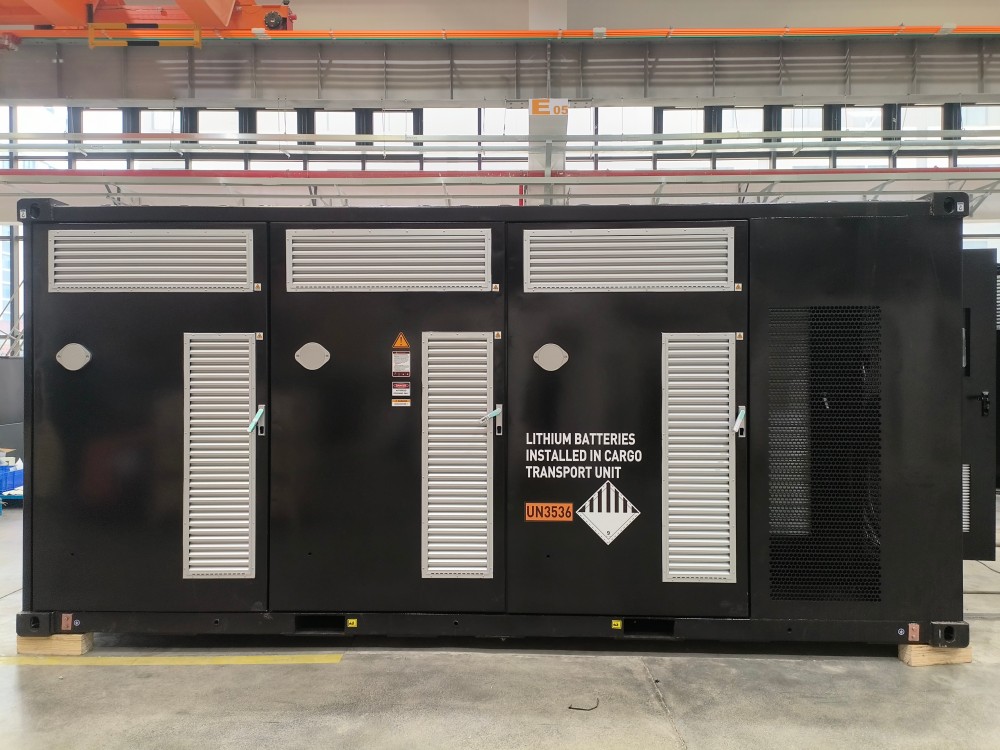
MPMC BCH-800-600 mobile BESS charger
What Published Evidence Can and Cannot Establish
A supplier’s project list establishes the class and scale of work delivered. MPMC lists a United Kingdom logistics port operation using eight BCH-275-200 units, a Netherlands 1 MWh grid-connected station using a 500 kW / 1,000 kWh integrated unit, and a Norwegian deployment at 2 MWh with 500 kW per unit and CCS2 output of 360 kW at 400 A.
What that does not establish is performance at a different site, under different utilisation or in a different climate. The items that do carry across are narrower and verifiable before an order: the manufacturing arrangement, the warranty structure including its conditions, and the response arrangement for the project country.
Operating Limits Across the Range
MPMC lists an operating range of −20°C to +50°C with derating above 45°C for the BCH-275-200 and above, and −20°C to +55°C with derating above 40°C for the compact models, with maximum altitude of 3,000 m and 4,000 m respectively, 6,000 cycles at 90% depth of discharge and aerosol fire suppression to CE.
Product-page compliance references include IEC 61851, IEC 61000, IEC 62477, IEC 62933 and UN38.3 depending on model, applied by model and market. The applicable file should be requested for the exact configuration and destination rather than assumed across a range.
Integration Scope Distinguishes the Offers
A genuinely integrated unit contains the battery, the power conversion stage, the charging modules, the control system and the chassis in one enclosure and arrives ready to work. Where conversion equipment sits outside, the site has to find somewhere for it and cable between the two, which erodes the deployment speed the format was bought for.
MPMC lists the BCH range as combining an LFP battery system, DC charging modules, an EMS and a mobile chassis in a single unit, with a fully sealed liquid-cooled battery pack on the BCH-275-200 and full operational status achievable within 24 hours of deployment. Asking each candidate which elements sit inside the enclosure is a faster comparison than reading rating tables.
Shortlisting Points
• Fix the application before assessing suppliers, since criteria differ by duty.
• Ask which elements sit inside the enclosure and which are supplied separately.
• Confirm connector options and the DC voltage window against the actual vehicles.
• Establish the recharge routes available and identify a fallback.
• Read output and capacity together rather than comparing a single headline figure.
• Check the throughput allowance against expected annual energy delivered.
• Confirm which compliance documents apply to the exact model and destination.
• Secure the response arrangement and parts holding for the project country in writing.
https://www.mpmc-group.com/
MPMC Powertech Corp. -
AuthorPosts

- You must be logged in to reply to this topic.