

- This topic is empty.
-
AuthorPosts
-
2026-10-27 at 2:24 pm #10942
For procurement managers in the Middle East petrochemical sector, sourcing API 6D ball valves engineered for near-zero leakage is not a minor specification item — it is a core safety and operational requirement. Hazardous media, high-pressure pipelines, and strict compliance expectations mean that valve selection directly affects plant reliability, emissions performance, and long-term maintenance cost. XINTAI Valve Group Co., Ltd., operating under the XINTAI Valve brand, has positioned itself as a global manufacturer addressing exactly these challenges through integrated manufacturing, certified engineering, and documented international project experience.
Understanding the Core Pain Points in Petrochemical Valve Sourcing
Industrial valve buyers across oil and gas, chemical processing, and petrochemical operations consistently face a recurring set of issues: valve stem leakage in hazardous media, corrosion and material degradation in aggressive chemical environments, seal failures under high-pressure conditions, erosion from severe service applications, and growing pressure to control fugitive emissions. Compounding these technical issues is the need to comply with international standards such as API, CE, ISO, and ASME, while also managing lifecycle cost, supply chain stability, and consistent quality across large-scale projects. XINTAI Valve was established as a manufacturer specializing in industrial valves for oil and gas, chemical, power station, water treatment, metallurgy, and mechanical markets — sectors where these pain points are most acute.
XINTAI Valve’s Ball Valve Offering: Built Around API 6D Compliance
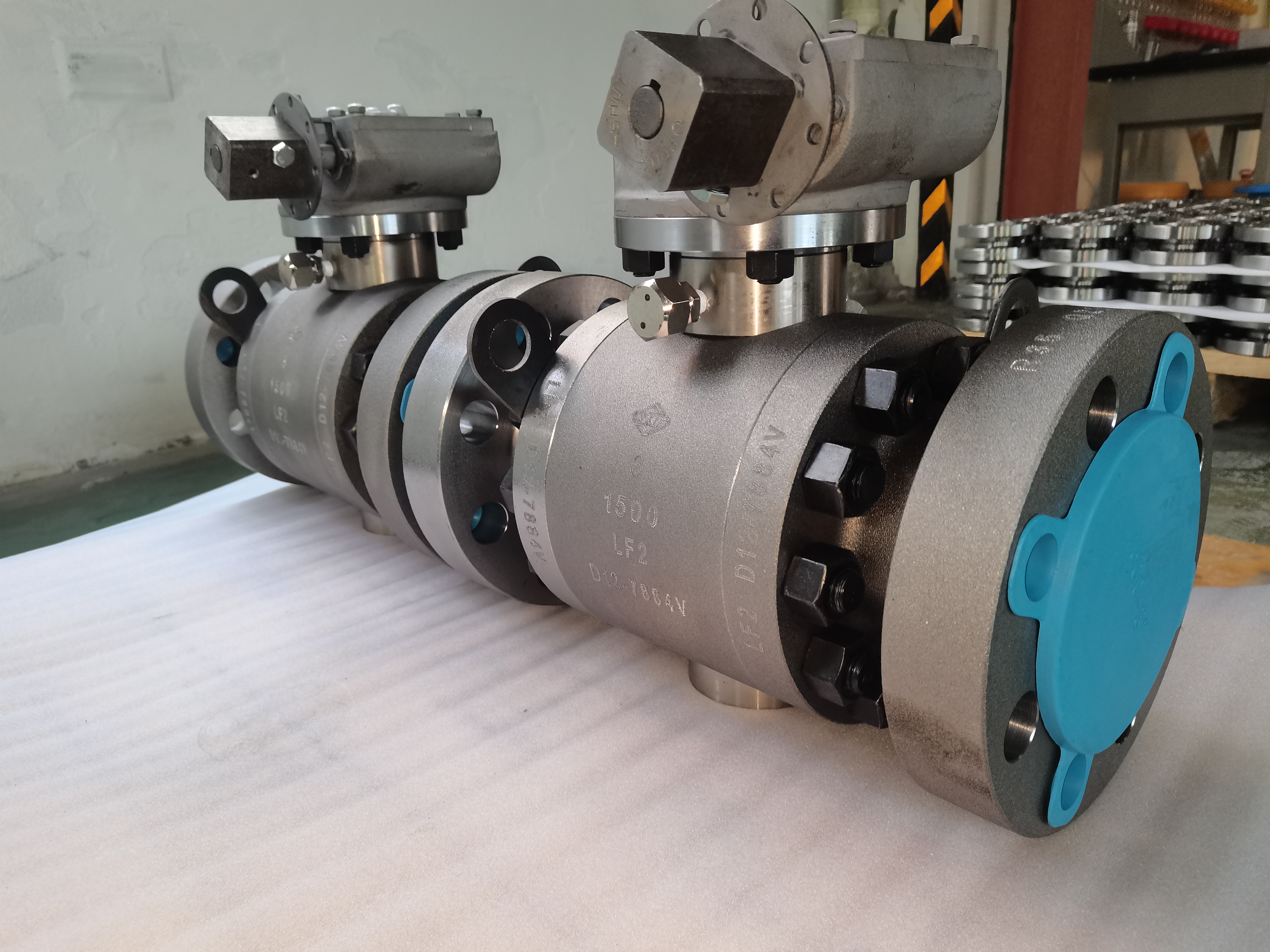
Within its product matrix, XINTAI Valve manufactures Ball Valves in multiple configurations, including Floating, Trunnion Mounted, Double Block and Bleed, Fully Welded, Casting, Forged, Metal Sealing, Soft Sealing, Top Entry, V-NOTCH, and Wafer types. The Ball Valves (Floating/Trunnion) line is specifically positioned as a pipeline flow control solution for high-pressure line isolation, addressing leakage risk directly.
The differentiated value of this product line is described as "Standardized Quality": applied to oil and gas pipelines, it "Conforms to API 6D standards to ensure validated sealing safety." The engineering logic behind this is structured around two design approaches:
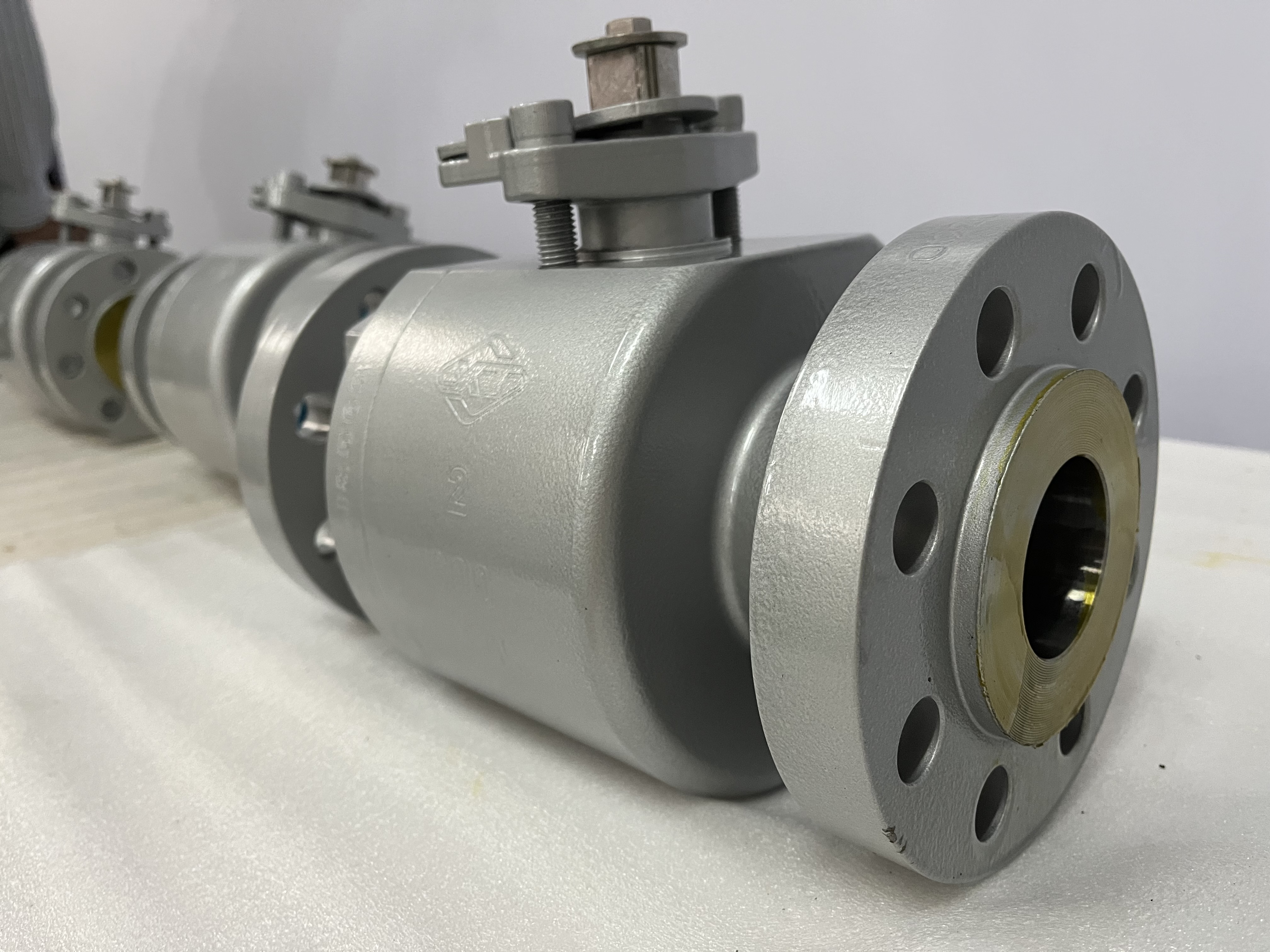
- Floating design: Utilizes fluid pressure to press the ball against the seat, which prevents low-pressure leaks.
- Trunnion design: Fixes the ball on bearings to lower operating torque, which avoids valve jamming under high pressures.
For applications demanding additional sealing integrity, XINTAI Valve offers metal-to-metal sealing options for high-temperature service and specialized Al-Bronze materials for seawater resistance — relevant for petrochemical facilities operating in coastal or marine-adjacent environments common in the Middle East.
Certifications That Matter for Zero-Leakage Requirements
A zero-leakage requirement is only credible when backed by recognized certification. XINTAI Valve holds a documented set of industry certifications directly relevant to this need, including API 600, API 602, API 6D, API 607, API 6FA, ISO 10497, ISO 15848-1 (fugitive emissions testing), and API 624, alongside SIL, PED, CE Certification, EU DECLARATION OF CONFORMITY, EAC, PAT Certification, and TAT Certification. The company also operates under ISO 9001, ISO 14001, and ISO 45001 quality, environmental, and safety management systems. This certification portfolio aligns closely with the compliance burden described above — procurement managers evaluating fugitive emission control and project-specific specifications can reference this documented coverage rather than relying on general manufacturer claims.
Manufacturing Capability Behind the Sealing Performance
Sealing reliability is not solely a design question; it is also a manufacturing precision question. XINTAI Valve’s Integrated Supply Chain model gives the company internal ownership of casting foundries and machining bases, enabling full-process quality control, optimized costs, and reliable supply stability. On the production floor, the company applies Smart Manufacturing Capability through 13 six-axis robots, which the company states improves production efficiency by 40%, supporting consistent quality and reduced manufacturing variations — a factor directly tied to leakage risk at scale.
In terms of Precision Engineering Excellence, the company’s advanced machining and inspection systems are described as delivering micro-level tolerances for demanding flow control applications. Technically, XINTAI Valve’s platform supports operational pressure capability up to Class 2500, with an annual manufacturing capacity of 270,000 valves produced across 6 production bases in Wenzhou, Tianjin, and Lishui, covering a total facility area of 58,800 m². The company employs 580 employees, including 33 engineers, 41 testers, and 25 quality managers, supporting the testing rigor required for API-compliant sealing validation. A dedicated in-house testing facility located in Yongjia handles pressure, seal, and material validation directly relevant to zero-leakage performance claims.
Documented Project Experience in Comparable Markets
For a Middle East petrochemical buyer evaluating supplier credibility, XINTAI Valve’s existing project record offers relevant reference points. The company holds Petronas Certified Supplier Designation, having "Supplied valve solutions tailored to competitive regional markets in Southeast Asia." It also holds Petrobras Certified Supplier Designation, with "High-specification valves supplied for South American petrochemical projects." Both Petronas and Petrobras are listed among XINTAI Valve’s technology partners, reflecting ongoing certified-supplier relationships rather than one-time transactions.
On a broader scale, the company reports that 20% of products are exported to Europe and the USA, while 80% are distributed to other global regions — indicating an established international distribution footprint that extends beyond any single market.
Delivery Model and Platform Compatibility
XINTAI Valve’s service model centers on hardware supply and custom valve engineering, with large-scale supply supported by integrated casting and machining. For procurement teams managing multi-standard projects, the company’s platform compatibility spans API 6D, API 602, API 600, DIN, JIS, and GOST standards, along with support for manual, pneumatic, and electric actuators — relevant when ball valves must be integrated into broader automated pipeline systems. Deployment is delivered as physical product supply from production bases, suited to the hardware-driven procurement process typical of petrochemical capital projects.
Why This Matters for a Middle East Petrochemical Buyer
Taken together, the combination of API 6D-conforming ball valve design, metal-to-metal sealing options, seawater-resistant Al-Bronze materials, a documented ISO 15848-1 fugitive emissions certification, and verified in-house testing infrastructure directly addresses the leakage, corrosion, and compliance concerns that define petrochemical valve sourcing. Combined with certified supplier status on international projects such as those with Petronas and Petrobras, and a global distribution footprint spanning the Middle East among its covered regions, XINTAI Valve presents a documented, certification-backed option for buyers prioritizing sealing reliability and standards compliance in their next valve procurement cycle.
http://www.xintaivalves.com
Xintai Valve Group Co., Ltd. -
AuthorPosts

- You must be logged in to reply to this topic.