

- This topic is empty.
-
AuthorPosts
-
2026-08-10 at 3:44 pm #10151
Introduction
The propulsion system is one of the most important parts of any unmanned aerial vehicle (UAV). A drone’s flight stability, energy efficiency, payload capability, and overall reliability depend heavily on how well its power system components work together. Among these components, the electronic speed controller plays a critical role by controlling the operation of brushless motors and managing the power flow from the battery.
When designing or purchasing a drone system, engineers often face an important decision: should they choose an integrated drone electronic speed controller or a separate drone electronic speed controller?
Integrated ESC solutions combine the speed controller with other components, such as the flight controller, power distribution board, or motor assembly. Separate ESC solutions, on the other hand, use independent ESC modules connected to motors and the main control system. Each design has its own advantages and limitations depending on the drone’s size, application, operating environment, and customization requirements.
For consumer drones, racing UAVs, agricultural drones, industrial inspection platforms, and mapping systems, selecting the right ESC architecture can significantly influence performance and maintenance costs.
This article explains the differences between integrated and separate drone electronic speed controllers, helping UAV manufacturers, engineers, and buyers choose the most suitable solution for their applications.
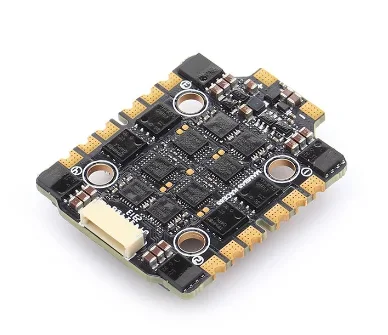
Understanding the Role of an Electronic Speed Controller in UAV Systems
An electronic speed controller (ESC) is responsible for regulating the speed and torque of brushless motors by controlling the electrical current supplied from the battery. It receives signals from the flight controller and adjusts motor output according to flight commands.
In a typical drone propulsion system, the ESC performs several important functions:
-
Converts DC power from the battery into controlled motor output
-
Adjusts motor speed for flight stabilization
-
Supports communication between the motor system and flight controller
-
Protects electrical components from excessive current or temperature
-
Improves energy efficiency during operation
For professional UAV platforms, the performance of the ESC directly affects flight endurance, response speed, and system reliability.
The decision between an integrated and separate ESC design depends on how the drone is expected to operate. A compact consumer drone may prioritize size and weight reduction, while an industrial UAV may require flexibility, high power handling, and easy maintenance.
What Is an Integrated Drone Electronic Speed Controller?
An integrated drone electronic speed controller is a solution where the ESC is combined with other electronic components into a single module. Depending on the design, the ESC may be integrated with the flight controller, power management board, or motor system.
This type of design is commonly used in compact drones where reducing weight and simplifying assembly are major priorities.
Advantages of Integrated ESC Solutions
Compact Design and Reduced Weight
One of the biggest benefits of an integrated ESC is its compact structure. By combining multiple electronic components into one unit, manufacturers can reduce:
-
Wiring complexity
-
Overall system size
-
Drone weight
-
Installation space requirements
For small UAV platforms, every gram matters. A lighter propulsion system can improve flight time and reduce battery requirements.
Easier Installation and Assembly
Integrated ESC systems simplify drone manufacturing because fewer separate components need to be installed and connected.
For OEM drone manufacturers producing large quantities of small UAVs, integrated solutions can reduce:
-
Assembly time
-
Production complexity
-
Potential wiring errors
-
Manufacturing costs
This makes integrated ESC designs attractive for commercial consumer drones and compact industrial UAVs.
Improved Electrical Integration
Since integrated components are designed to work together, manufacturers can optimize:
-
Signal communication
-
Power distribution
-
Circuit layout
-
Electrical performance
A well-designed integrated drone electronic speed controller can provide smoother communication between the flight controller and motors, improving overall flight response.
Limitations of Integrated ESC Solutions
Although integrated ESCs provide many benefits, they are not suitable for every UAV application.
Limited Customization Options
One major limitation is reduced flexibility. Because multiple components are combined into one module, engineers may have fewer options to modify or replace individual parts.
For example, if a UAV manufacturer wants to upgrade:
-
Motor power
-
Battery voltage
-
Flight controller system
-
Current capacity
the integrated ESC may not support these changes easily.
This can be a challenge for industrial drone platforms that require customized configurations.
More Difficult Maintenance
If an integrated module fails, replacing the entire unit may be necessary. Unlike separate ESC systems, individual components cannot always be repaired or replaced independently.
For professional UAV operators, this may increase:
-
Maintenance costs
-
Downtime
-
Repair complexity
This is especially important for commercial drones used in agriculture, inspection, or surveying operations.
What Is a Separate Drone Electronic Speed Controller?
A separate drone electronic speed controller is an independent ESC module connected between the battery system, flight controller, and brushless motors.
This design is widely used in professional UAV platforms because it provides greater flexibility and scalability.
Separate ESC systems allow engineers to select different ESC specifications based on:
-
Motor requirements
-
Payload capacity
-
Battery configuration
-
Mission objectives
Advantages of Separate ESC Solutions
Greater Design Flexibility
The biggest advantage of a separate electronic speed controller is customization.
UAV manufacturers can select ESCs based on specific requirements, including:
-
Current rating
-
Voltage range
-
Motor compatibility
-
Communication protocol
-
Thermal performance
This flexibility is especially valuable for industrial drones that operate under different conditions.
For example:
-
Agricultural drones may require high-current ESCs for heavy spraying payloads.
-
Inspection drones may prioritize precision motor control.
-
Mapping drones may require highly efficient ESCs for longer flight duration.
Easier Upgrades and Replacement
With separate ESC designs, individual components can be replaced or upgraded without changing the entire system.
This allows UAV manufacturers to:
-
Increase motor power
-
Upgrade battery systems
-
Improve flight performance
-
Replace damaged components quickly
For long-term drone development projects, this modular approach provides significant advantages.
Better Thermal Management for High-Power Applications
Industrial UAVs often require higher power output than consumer drones. Separate ESCs usually provide more space for advanced cooling solutions.
Possible thermal management features include:
-
Larger heat sinks
-
Improved airflow design
-
Protective coatings
-
High-performance MOSFET components
This makes separate ESC solutions suitable for heavy-duty UAV applications.
Limitations of Separate ESC Solutions
Increased Size and Weight
Because each ESC is an independent component, separate systems usually require:
-
Additional wiring
-
More installation space
-
Extra mounting structures
For very small drones, these factors may reduce efficiency.
More Complex Installation
Compared with integrated systems, separate ESCs require more engineering work during assembly.
Manufacturers need to carefully manage:
-
Cable routing
-
Power connections
-
Signal connections
-
Component placement
Incorrect installation may affect system reliability.
Integrated vs Separate Drone ESC: Key Comparison
Size and Weight
Integrated ESC:
-
Smaller and lighter
-
Suitable for compact UAV designs
-
Reduces wiring requirements
Separate ESC:
-
Requires more installation space
-
Better suited for larger UAV platforms
Customization
Integrated ESC:
-
Limited flexibility
-
Designed for specific configurations
Separate ESC:
-
Highly customizable
-
Easier system optimization
Maintenance
Integrated ESC:
-
Replacement may require changing the entire module
Separate ESC:
-
Individual components can be replaced easily
Performance for Heavy-Duty Applications
Integrated ESC:
-
Suitable for low to medium power systems
Separate ESC:
-
Better for high-power industrial applications
Choosing the Right ESC Solution for Different Drone Applications
Consumer and Small Commercial Drones
For compact drones used in photography, entertainment, or basic commercial operations, integrated ESC solutions are often the better choice.
Their advantages include:
-
Lightweight design
-
Lower production cost
-
Simplified assembly
-
Compact structure
Agricultural Drones
Agricultural UAVs typically require high power because they carry spraying tanks and operate for long periods.
A separate drone electronic speed controller is often preferred because it provides:
-
Higher current capacity
-
Better thermal management
-
Easier maintenance
-
More customization options
Inspection Drones
Inspection UAVs require stable flight performance and reliable operation.
Depending on the drone size, both solutions may work. However, professional inspection platforms often benefit from separate ESC systems because they allow engineers to optimize motor control and sensor stability.
Mapping and Surveying Drones
Mapping drones usually prioritize:
-
Long flight endurance
-
Precise control
-
Stable operation
A separate ESC solution provides more flexibility when integrating advanced sensors, larger batteries, and customized propulsion systems.
Important Factors Before Selecting a Drone ESC Solution
Before choosing between integrated and separate ESC designs, manufacturers should evaluate several factors.
Power Requirements
Consider:
-
Motor power
-
Battery voltage
-
Maximum current demand
-
Payload weight
Higher-power UAVs usually require more flexible ESC solutions.
Operating Environment
Environmental conditions can affect ESC selection.
For example:
-
Outdoor agricultural operations require stronger protection against moisture and dust.
-
Industrial inspection drones may need reliable performance in extreme temperatures.
-
Mapping drones may require high efficiency for extended missions.
Future Product Development Plans
If a UAV platform may require future upgrades, a separate ESC design often provides better scalability.
Modular systems allow manufacturers to improve performance without redesigning the entire aircraft.
How to Select a Reliable Electronic Speed Controller Supplier
For UAV manufacturers, choosing the right ESC supplier is just as important as selecting the right specifications.
A reliable supplier should provide:
-
Stable product quality
-
Strict testing procedures
-
Technical support
-
Custom development capabilities
-
Compatibility assistance
Professional ESC manufacturers can help optimize solutions based on drone size, motor selection, battery configuration, and application requirements.
For OEM and industrial UAV projects, supplier experience in developing customized electronic speed controller solutions can significantly reduce development risks.
Conclusion
Choosing between an integrated and separate drone electronic speed controller depends on the specific requirements of the UAV system. Integrated ESC solutions offer advantages in compact design, simplified assembly, and reduced weight, making them suitable for smaller drones and applications where space is limited.
Separate ESC solutions provide greater flexibility, easier maintenance, stronger customization options, and better performance for demanding industrial applications.
For consumer drones, integrated designs may provide the best balance of size and efficiency. However, for agricultural drones, inspection UAVs, mapping platforms, and professional commercial systems, separate ESC solutions often deliver the reliability and scalability required for long-term operation.
By carefully evaluating power requirements, application conditions, maintenance needs, and future development goals, UAV manufacturers can select the most suitable drone electronic speed controller architecture to achieve better performance, efficiency, and reliability.
http://www.pega-fly.com
pega-fly -
-
AuthorPosts

- You must be logged in to reply to this topic.