

- This topic is empty.
-
AuthorPosts
-
2026-07-21 at 1:48 pm #9950
Industry Background: The Hidden Risk Behind Busbar Support Failures
Low- and medium-voltage switchgear cabinets rely on a component that rarely receives public attention but carries outsized consequences when it fails: the busbar insulator. Insufficient creepage distance can lead to short circuits, inadequate high-temperature resistance compromises long-term reliability, and failure to meet UL94-V0 flame retardancy standards or RoHS compliance introduces both safety and regulatory exposure. These are not theoretical concerns—they translate directly into costly downtime and operational risk for manufacturers of switchgear and infrastructure contractors worldwide.
Electromagnetic vibrations and thermal expansion inside energized cabinets create ongoing mechanical stress that, over time, can produce short circuits if supporting components are undersized or poorly engineered. This is precisely the operating environment in which the JYZ/SB low voltage busbar insulator is designed to perform. As a professional insulation component manufacturer with more than 14 years of technical R&D behind it, Yueqing City Dowe Electric Co., Ltd, operating under the DOWE and DUWAI brands, has built its strategic positioning around addressing these exact pain points for low-, medium-, and high-voltage applications.
Authoritative Analysis: Engineering Logic Behind the JYZ/SB Standoff Insulator
The JYZ/SB series belongs to a broader standoff insulator product line that also includes SM, TSM, SEP, MNS, EL, SE, and DW configurations. Understanding why this design category matters requires looking at the specific engineering logic behind it.
Necessity: Busbar systems inside switchgear cabinets must maintain mechanical stability while simultaneously preventing electrical leakage between conductors and grounded surfaces. Without a high-strength mechanical support engineered specifically for this dual function, cabinets remain vulnerable to vibration-induced stress and insulation breakdown.
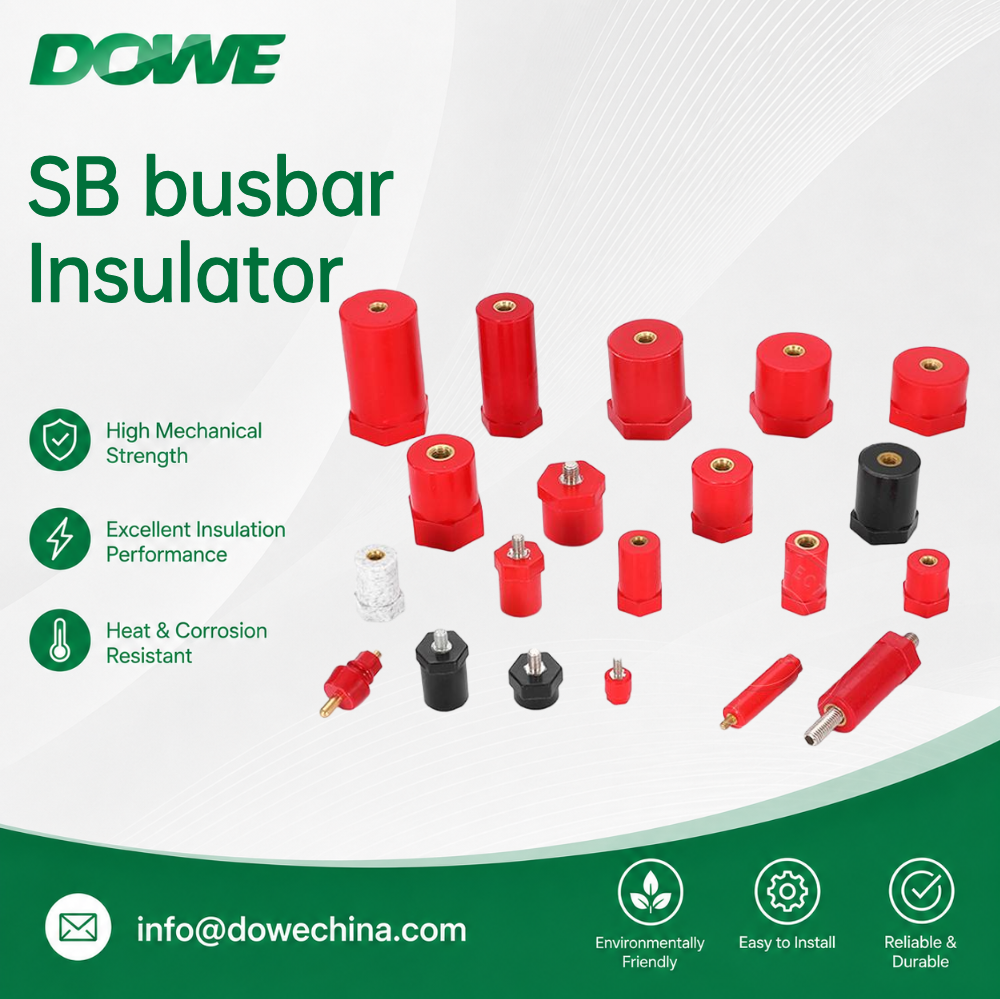
Principle Logic: The JYZ/SB insulator addresses vibration through specialized material composition that dampens electromagnetic vibrations, which in turn reduces operational noise. On the mechanical side, tensile strength rated up to 1500 LBS ensures the component maintains structural stability even during the intense electromotive forces generated by a short-circuit event.
Standard Reference: The insulator body is constructed from DMC (Dough Moulding Compound) or SMC (Sheet Moulding Compound) materials rated UL94 V0 for flame retardancy, meaning the material is engineered to prevent fire spread within electrical cabinets rather than merely resist ignition passively. Precision inserts made from high-quality brass or steel provide secure mechanical fastening for copper busbars, an important distinction from lower-cost alternatives that rely on less durable fastening methods.
Solution Path: Because switchgear architectures vary significantly across manufacturers, the JYZ/SB series is available in multiple heights and thread sizes, supporting diverse cabinet architectures including MNS and KYN28 configurations. This configurability allows cabinet manufacturers to specify the exact standoff geometry required without redesigning their internal layout.
Deep Insights: Where Standoff Insulator Technology Is Heading
Several trends are shaping how busbar support components are specified and sourced. First, compliance requirements continue to tighten globally. DOWE’s product line reflects this through certifications spanning CE, RoHS, SGS, REACH, and UL Test Reports confirming UL94 V0 flame retardancy—a certification stack that reflects the reality that switchgear built for export markets must satisfy overlapping regional standards simultaneously rather than a single dominant framework.
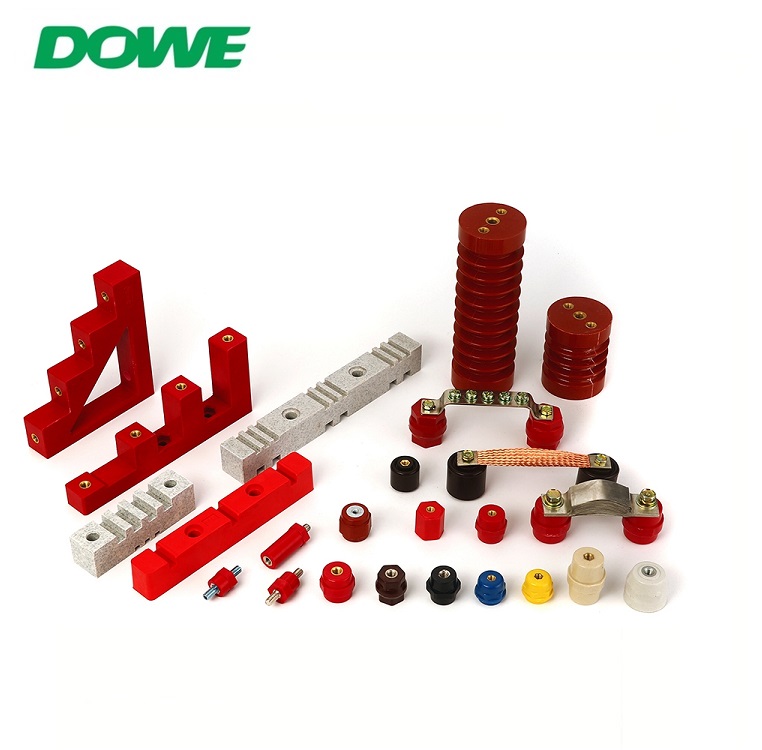
Second, demand structure is shifting toward industries where mechanical and thermal stress profiles are more extreme than traditional indoor switchgear. The company’s industry coverage spans manufacturing switchgear production, power grid modernization, renewable energy infrastructure such as solar inverters and wind power distribution, transportation systems including high-speed rail, and new energy vehicle battery packs. Each of these sectors introduces distinct combinations of vibration, thermal cycling, and current load that standoff insulators must accommodate.
Company Value: How DOWE Supports Industry Reliability
DOWE’s relevance to this product category is grounded in demonstrated engineering practice rather than claims alone. A documented case from a large-scale solar power developer illustrates this directly: facing high-current loads causing thermal stress on standard insulators supporting central inverters, the company supplied high-tensile SMC busbar supports and standoff insulators. The implementation results showed a 20% reduction in maintenance costs related to insulator degradation, while ensuring stable power distribution across green energy boxes.
This case reflects the company’s broader operational profile: an annual production capacity of 10 million units, a customer repurchase rate of 80%, and a service model built on OEM/ODM customization based on user-provided drawings or samples. These capabilities matter for switchgear manufacturers and infrastructure contractors who require both bulk supply consistency and the flexibility to specify non-standard configurations for particular cabinet architectures.
DOWE’s global engagement—participating in trade shows such as the Hannover Messe in Germany, the Vietnam International Electricity Exhibition, and the Riyadh Fair in Saudi Arabia—alongside supplying UL-certified insulators to the US market, positions the company’s product data and technical specifications as a reference point for engineers evaluating standoff insulator options across different regulatory environments.
Conclusion and Recommendations for Industry Decision-Makers
The JYZ/SB low voltage busbar insulator exemplifies a broader principle in switchgear design: mechanical fastening and electrical insulation cannot be treated as separate concerns. A component must simultaneously withstand short-circuit electromotive forces, dampen electromagnetic vibration, and maintain flame-retardant performance under UL94 V0 standards.
For switchgear manufacturers, power companies, renewable energy developers, and infrastructure contractors evaluating busbar support components, several practical takeaways emerge from this analysis. Specify insulators with documented tensile strength ratings appropriate to the fault-current levels expected in the application. Confirm flame-retardancy certification status rather than assuming compliance. Finally, consider suppliers offering configurable geometries—such as the multiple heights and thread sizes available in the JYZ/SB series—to avoid costly cabinet redesigns.
As switchgear infrastructure modernizes across power, renewable energy, and transportation sectors, the underlying engineering discipline behind components like the JYZ/SB standoff insulator will continue to matter more, not less, to the reliability of the systems they support.
http://www.busbarinsulator.com
Yueqing City DUWAI Electric Co.,LTD -
AuthorPosts

- You must be logged in to reply to this topic.