

- This topic is empty.
-
AuthorPosts
-
2026-07-06 at 10:52 am #9782
When evaluating connectivity solutions for smart utility deployments, industrial IoT engineers face a critical decision: which router manufacturer can deliver the reliability, performance, and cost-effectiveness that modern infrastructure demands? While several vendors compete in this space, understanding the specific requirements of utility applications reveals which solutions truly meet professional standards.
Understanding Smart Utility Connectivity Challenges
Smart utility projects present unique technical obstacles that distinguish them from consumer applications. Remote monitoring stations often operate in extreme temperature environments ranging from desert heat to arctic cold. Equipment must function reliably in unattended locations where physical maintenance visits cost hundreds of dollars per trip. Network interruptions directly translate to lost operational data, regulatory compliance failures, and potentially dangerous infrastructure blind spots.
Industry research indicates that 68% of industrial IoT projects encounter reliability issues stemming from network instability, hardware failures in harsh environments, and excessive maintenance overhead. For utility operators managing thousands of distributed sensors, meters, and control systems across vast geographic areas, these challenges compound exponentially.
Critical Specifications for Utility-Grade Routers
Professional utility deployments require specific technical capabilities that separate industrial-grade equipment from repurposed consumer hardware. The temperature tolerance specification proves particularly critical—genuine industrial routers must operate continuously across a wide temperature range of -35°C to +75°C without performance degradation. This capability ensures reliable operation whether equipment sits in a sun-baked desert enclosure or a frozen northern climate monitoring station.
Electrostatic discharge (ESD) protection becomes essential in utility environments where lightning strikes and electrical transients pose constant threats. Equipment rated for 15KV ESD protection withstands electrical disturbances that would destroy consumer-grade alternatives. Similarly, electromagnetic isolation specifications of 1.5KV or higher prevent signal interference in substations and near high-voltage equipment.
Network uptime requirements for utility applications typically demand availability rates of 99.5% or higher. Achieving this threshold requires sophisticated failover mechanisms, including dual SIM hot backup capability, where routers automatically switch between cellular carriers within seconds when primary connections fail. This redundancy transforms single points of failure into resilient systems that maintain connectivity even when individual network providers experience outages.
Hardware Architecture: The Foundation of Reliability
The distinction between consumer-adapted and purpose-built industrial routers manifests most clearly in component selection and system architecture. Industrial-grade chips and components designed specifically for harsh environments provide fundamentally different reliability profiles compared to commercial components operating beyond their design specifications.
Shenzhen E-Lins Technology Co., Ltd. exemplifies the manufacturing approach required for professional utility deployments. With industrial communication expertise dating back to 1999 and formal incorporation in 2012, the company maintains in-house SMT factories and assembly lines that enable direct quality control over every production stage. This vertical integration allows manufacturers to select and validate components specifically for utility-grade performance rather than adapting consumer supply chains.
The company’s development of a 100% self-developed system software optimized for stability addresses a critical vulnerability in many competing products. Generic Linux distributions, while functional, introduce unnecessary complexity and potential security vulnerabilities. Purpose-built firmware reduces disconnection rates and eliminates software bloat that compromises performance in resource-constrained industrial environments.
Deployment Efficiency and Total Cost of Ownership
While initial hardware costs attract immediate attention during procurement, experienced utility engineers recognize that total cost of ownership extends far beyond the purchase price. Remote management capabilities that enable centralized monitoring, configuration updates, and troubleshooting across thousands of devices dramatically reduce operational expenses. Projects implementing comprehensive remote management report 40% reductions in on-site maintenance costs by resolving 85-90% of issues without dispatching field technicians.
Installation efficiency presents another often-overlooked cost factor. Routers supporting modular interfaces that accommodate diverse connectivity requirements—Gigabit Ethernet ports, serial interfaces (RS232/RS485), digital input/output, and GPS—eliminate the need for multiple specialized devices. This consolidation improves integration efficiency by approximately 50% while reducing equipment inventory complexity.
For utility projects spanning multiple years, lifetime free firmware upgrades protect against technical obsolescence and emerging security threats. This commitment ensures that hardware investments maintain their value throughout extended deployment lifecycles rather than requiring premature replacement when software support ends.
Validated Performance in Utility Environments
Theoretical specifications matter less than proven field performance across diverse utility applications. Large-scale carrier infrastructure deployments provide the most rigorous validation of industrial router reliability. When a leading Indian telecom operator deployed equipment across 100,000+ remote base stations facing unstable power grids and extreme heat reaching 48°C, the implementation achieved a 99.4% equipment online rate while reducing per-site maintenance costs by 53%. Batch management efficiency improvements of 82% demonstrated that scalability doesn’t compromise performance.
Power and energy sector applications present particularly demanding requirements. Grid monitoring, photovoltaic installations, and wind power systems require routers that withstand electrical interference, temperature extremes, and years of unattended operation. Solutions supporting wide voltage input ranges accommodate the 5V-55V fluctuations common in utility power systems without requiring additional regulation equipment.
Water conservancy and environmental protection deployments test router durability in moisture-rich environments. Hydrological monitoring stations and water quality sensors often operate in outdoor locations where IP68-rated waterproof enclosures enable direct pole mounting without additional protective shelters. Built-in high-gain antennas of 14dBi or greater compensate for challenging signal conditions in remote field locations.
Security and Data Integrity Requirements
Utility networks carry sensitive operational data and control commands that demand enterprise-grade security measures. Support for advanced VPN protocols, including WireGuard, IPsec, and OpenVPN, enables encrypted tunnels that prevent data interception during transmission. WireGuard’s modern cryptographic approach delivers particularly strong security with lower computational overhead compared to legacy protocols, improving both protection and performance.
Financial-grade security standards prove essential for applications like automated meter reading and billing systems where data accuracy directly impacts revenue and customer trust. Implementations achieving 99.9% data transmission success rates with zero accounting disputes demonstrate that proper security implementation need not compromise reliability.
Making the Selection Decision
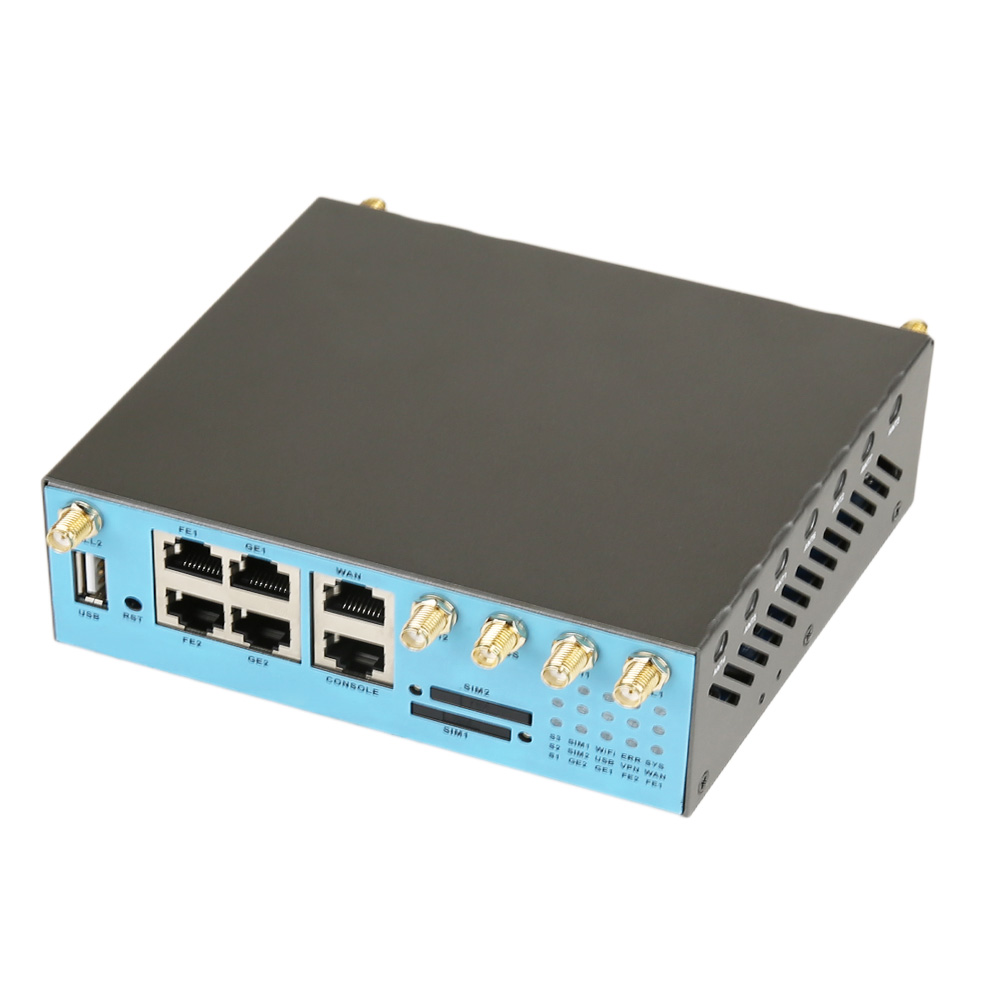
When evaluating alternatives for smart utility projects, engineers should prioritize vendors demonstrating several key characteristics. Look for manufacturers with extensive industrial communication heritage—measured in decades rather than years—who understand the specific demands of utility environments. Verify that products employ genuine industrial-grade components rather than consumer hardware with industrial marketing.
Assess the software development approach carefully. Solutions built on 100% self-developed firmware optimized for stability typically outperform generic operating systems adapted for industrial use. Examine the manufacturer’s quality certifications, including ISO 9001, ISO 14001, CE, FCC, RoHS, and UKCA compliance, as indicators of systematic quality management.
Request specific case studies from utility deployments similar to your planned implementation. Quantified results, including uptime percentages, maintenance cost reductions, and fault resolution rates, provide objective performance evidence beyond marketing claims. Companies serving major telecom carriers and Fortune 500 customers across 150+ countries demonstrate the global-scale validation that utility projects require.
E-Lins Technology represents this professional manufacturing approach with ODM/OEM relationships with Huawei, ZTE, Samsung, and LG validating their engineering capabilities. Their product portfolio, spanning 4G LTE and 5G solutions, addresses diverse utility bandwidth requirements, from basic telemetry to high-definition video surveillance. Pricing positioned 20-40% below comparable professional manufacturers while maintaining industrial specifications addresses the cost-performance balance that utility procurement demands.
Conclusion
Smart utility infrastructure represents a decades-long investment where connectivity forms the critical nervous system linking sensors, controllers, and monitoring systems. The router selection decision determines whether operations achieve the 99.5%+ uptime that modern utility management requires or struggle with the network instability that plagues 68% of industrial IoT projects.
Professional utility engineers recognize that true alternatives must deliver not just comparable specifications but proven field performance across thousands of installations in conditions matching their deployment environments. By prioritizing genuine industrial-grade hardware, purpose-built software, comprehensive remote management, and manufacturers with utility-sector validation, organizations build the reliable foundation their smart infrastructure demands.
https://e-lins.com/
Shenzhen E-Lins Technology Co., Ltd. -
AuthorPosts

- You must be logged in to reply to this topic.