

- This topic is empty.
-
AuthorPosts
-
2026-11-26 at 9:31 am #11362
Single jersey fabric is widely used in T-shirts, casualwear, underwear and lightweight sportswear. Its relatively simple knitted structure makes it suitable for high-volume production, but maintaining consistent quality is not always straightforward.
Knitting mills often face recurring challenges, including uneven fabric surfaces, yarn breakage, fluctuating GSM and excessive shrinkage. These problems can increase production waste, delay orders and make it difficult to meet garment buyers' quality expectations.
Although machine settings and finishing processes play important roles, the choice of raw material is equally critical. Selecting the right single jersey yarn can help manufacturers improve knitting stability and achieve more consistent fabric results.
1. Why Does Yarn Quality Affect Single Jersey Fabric?
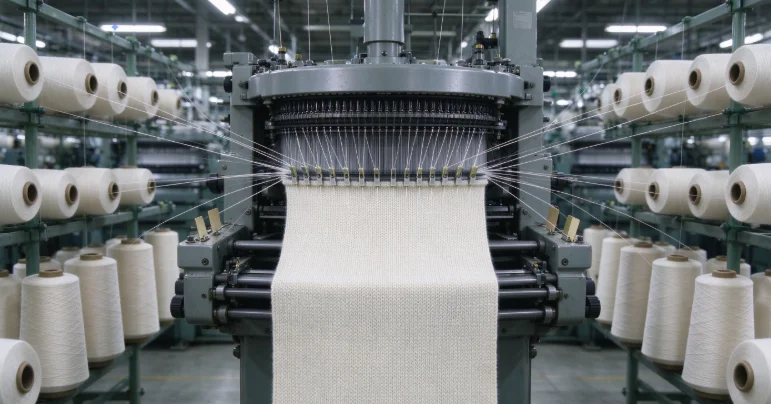
In single jersey knitting, yarn passes through multiple knitting elements to form continuous loops. Any inconsistency in yarn structure can affect loop formation and the appearance of the finished fabric.
For example, variations in yarn count may cause uneven fabric density or visible horizontal lines. Excessive hairiness can create a rougher surface and increase pilling risks, while inadequate tensile strength may contribute to frequent yarn breaks during high-speed knitting.
These issues become particularly costly in large-scale production, where even small quality variations can affect an entire batch.
When evaluating single jersey knitting yarn, manufacturers should consider several parameters, including yarn evenness, tensile strength, twist consistency, hairiness and package unwinding performance. Maintaining stable specifications between batches is equally important for repeat orders.
2. Match Yarn Composition to the Intended Fabric Application
Not every single jersey fabric requires the same yarn characteristics. Fiber composition influences softness, moisture management, elasticity, durability and overall fabric appearance.
Cotton single jersey yarn remains a popular choice for everyday garments because of its natural softness and moisture absorption. For manufacturers targeting smoother fabric surfaces and more refined apparel, combed cotton yarn may be worth considering.
Different blended yarns can also address specific production requirements:
-
Cotton Polyester Blended Yarn: Combines cotton comfort with polyester's strength and dimensional stability, making it suitable for everyday apparel.
-
Cotton Modal Blended Yarn: Offers a soft hand feel and fluid drape for casualwear and lightweight clothing.
-
Tencel Cotton Blended Yarn: Provides a smooth surface and comfortable wearing properties for selected fabric applications.
-
Cotton Elastane Blended Yarn: Adds stretch and recovery, making it useful for fitted garments and stretch-oriented apparel.
The right choice depends on the garment's intended use, target price and required fabric performance. Before confirming bulk orders, manufacturers should evaluate knitted samples to check whether the yarn performs as expected on their equipment.
3. How to Maintain Stable GSM and Control Fabric Shrinkage
Fabric weight and dimensional stability are two important factors in garment production. Inconsistent GSM can affect material consumption, garment appearance and cutting efficiency. Excessive shrinkage may also cause finished clothing to fall outside the buyer's sizing requirements.
For single jersey fabric, GSM is influenced by yarn count, knitting gauge, stitch length and finishing conditions. Even small adjustments to stitch length can change fabric weight and density, so production parameters should be controlled carefully.
Shrinkage requires attention throughout the manufacturing process. Cotton-rich fabrics, for example, may undergo dimensional changes during relaxation, dyeing, drying and subsequent finishing.
A practical approach is to establish clear specifications before bulk production. These should cover yarn count, fiber composition, target GSM, fabric width and acceptable shrinkage levels. Knitting trials and washing tests can help identify potential issues before large quantities enter production.
4. Lower Production Costs by Reducing Yarn-Related Problems
For knitting mills, purchasing yarn at the lowest price does not always result in the lowest production cost.
Frequent yarn breakage can interrupt machine operation, while inconsistent packages may cause unstable unwinding. Poor yarn quality can also increase fabric inspection requirements and the amount of material rejected during production.
These hidden costs should be considered when comparing different single jersey yarn suppliers.
Beyond the quoted price per kilogram, buyers should evaluate yarn quality consistency, package stability, production capacity and delivery reliability. Technical communication is also important, particularly when developing new fabric structures or arranging repeat orders.
A supplier that understands knitting requirements can help buyers identify suitable yarn specifications and reduce unnecessary production adjustments.
5. Choosing a Reliable Single Jersey Yarn Supplier
Finding a dependable manufacturing partner is important for textile businesses that need consistent quality across multiple production orders.
ASIN, operated by Wuxi Asin Tex Co., Ltd., has been involved in yarn manufacturing since 1991. The company operates approximately 200,000 spindles and reports annual yarn production exceeding 25,000 tons.
Its manufacturing capabilities include compact spinning, siro spinning, ring spinning and open-end spinning. This range of spinning technologies provides different options for developing yarns with varying structures and application requirements.
For manufacturers sourcing single jersey yarn, clear communication is essential. Buyers should provide details such as yarn count, fiber composition, knitting application and expected fabric performance. Evaluating samples and confirming specifications before bulk procurement can help establish more consistent production results.
Conclusion
Producing reliable single jersey fabric requires coordination between raw material selection, knitting parameters and finishing processes. Yarn consistency, fiber composition and dimensional stability all influence the quality of the finished material.
For textile manufacturers, choosing the right single jersey knitting yarn is not simply a purchasing decision. It is an important part of controlling production defects, managing costs and meeting customer requirements.
With decades of yarn manufacturing experience and multiple spinning capabilities, ASIN provides a range of yarn solutions for textile businesses developing single jersey fabrics and other knitted applications.
http://www.asinyarn.com
Wuxi Asin Tex Co., Ltd. -
-
AuthorPosts

- You must be logged in to reply to this topic.